

Renewable Energy Hot Topics
Pre-Recorded Online CPD Course

1 Assessment
Multiple Choice Questions
18 Lessons
Covering every topic you need
8 Hours
Course Lenght
 An incredible learning experience
World-class renewable energy course for anyone, anywhere!

Improve your Renewable Energy Skills
This CPD course caters to Engineers, Technicians, Facilities Managers, Energy Professionals, Architects and others who are interested in enhancing their understanding of renewable energy, and would like to learn about methods, best practices and strategies for selection of the most suitable renewable energy alternative, with technical, geographic and financial feasibility in mind.
Who should attend?
Professionals, who do not possess prior experience or knowledge in the renewable energy realm, including Project Management Staff, Energy Project Financial Analysts and Technical Writers.
Procurement/Purchasing Professionals who are responsible for obtaining renewable energy project proposals
Bachelor’s degree level students
Construction managers who manage renewable energy project installations.
.
Find all what you need in this course to become an expert in any topic
in Renewable Energies
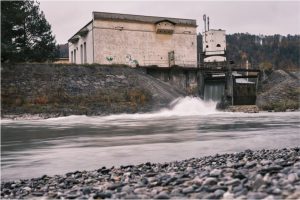
Introduction to a few important fundamentals of energy and the “grid” sets the tone for better comparison of current source of energy with optimal renewable energy alternative. Importance of the concept of most direct application of renewable source to the final energy demand point is highlighted. After the introduction, this seminar dives into some of the more proven and mainstream renewable energy topics. Current footprint and relative cost differences between some of the major renewable energy systems are examined. Strengths, weaknesses, opportunities, and threats pertaining to some of the mainstream renewable energy solutions are discussed. Some of the cutting edge, and yet unproven, renewable energy systems are introduced. The discussion on the topic of renewable energy is sustained by diagrams, schematics and pictures pertaining to major renewable energy systems.
Upon successful completion of this course, participants will be able to:
- Perform technical/engineering and cost comparisons between energy obtained from the grid versus the energy harnessed from renewable sources. Identify and quantify technical and financial benefits of renewable energy systems.
- Specify and implement renewable energy systems that leverage direct application of renewable energy sources to the point of use, thus maximizing the efficiency and net benefit of renewable energy systems.
- Examine and assess alternative renewable energy technologies based on physics and engineering principles. Assess the performance of renewable energy systems based on physics and engineering equations that correlate physical parameters to the power and energy output of wind turbines. These equations serve as tools in design, analysis, suitable location selection and application of wind turbines. Utilize physics and engineering principles and equations to evaluate the performance of hydroelectric turbines.
- Evaluate technical/engineering strengths and weaknesses of major renewable energy technologies like hydroelectric, tidal, wave, wind, geothermal, solar heat, solar light, solar PV, solar chimney, and biomass.
- Follow progress on some of the major, more recent, notable renewable projects in the world. Benefit from the lessons on these projects in avoiding pitfalls in the design/specification of renewable energy systems.
- Identify some of the more unbiased and reliable technical and commercial information sources in the renewable energy arena; thus, staying abreast of progress and current data in the renewable energy realm, beyond this seminar.

Course Content
- Energy Facts
- Energy Basics
- Electricity Basics
- Electrical Bill Calculation and Load Factor
- Overview of Renewable Energy Technologies
- Hydroelectric Power
- Tidal Energy
- Wind Energy
- Geothermal Energy Technology
- Solar Technologies
- Solar Heating
- Solar Heat – Renewable Electrical Energy Technologies
- Photovoltaic Renewable Energy
- Major Solar Energy Projects – Domestic and International
- Biomass Renewable Energy Technologies
- Emerging Renewable Energy Technologies
- Financial Justification and Implementation of Energy Projects
- Renewable Energy Information Sources
CPD Certification
To successfully complete the course, it will be required to score 50% or more the overall final grade. The assessment consists of a multiple choice questions exam.
Do not worry, if you do not pass or achieve the minimum 50% mark required, we will still issue a Certificate of Participation by SolarTech-UK to justify your successful completion of the course and without a doubt, to present for any professional purposes and/or to your peers showing all the knowledge you have gained!

Get started today
Our product is best in class and we stand behind its quality. This course includes:
- 8 hours on-demand video
- 12 Months Access
- CPD Certification at Completion
- Access on mobile and laptop
- Over 5000+ certified attendees
- Top Professor in Renewable Energies



Instructor
Professor S. Bobby Rauf, P.E, C.E.M, MBA; Member, American Society of Engineering Education.
Professor Bobby Rauf has over 25 years of experience in teaching undergraduate and post graduate Engineering, Science, Math, Business Administration and MBA courses, seminars and workshops. Prof. Rauf is registered (PE) Professional Engineer, in the State of North Carolina, a Certified Energy Manager and a certified ergonomist. Prof. Rauf was inducted as “Legend in Energy” by AEE, in 2014. He is a published author of multiple engineering and energy books, and professional development courses. He holds a patent in process controls technology. Prof. Rauf develops and instructs continuing education, engineering skill building courses. Some his major clients include Texas A&M University, Saudi Aramco – KSA, University of North Carolina at Charlotte, McNeese University, Lamar University, Clemson University, Association of Energy Engineers, EPIC College – Canada; US Bureau of Reclamation, BHP Billiton, CED, and Y-F Asia. Prof. Rauf’s last full-time engineering employment, in the corporate world, was at PPG Industries, Inc. where he served as a Senior Staff Engineer. He brings to this program more than 25 years of hands-on experience in a broad spectrum of areas within large industrial plant engineering and plant maintenance departments, including electrical, controls, energy and mechanical projects. Professor Rauf has served as Adjunct Professor at Gardner-Webb University since 1989, where he has instructed classes in both the B.A. and M.B.A. programs.
NAIRA (N) PAYMENT?
N302,494.50

CEDI PAYMENT?
GHC 3,434.69
USD ($) PAYMENT?
$549.99